What is Fiber?

Monday, June 21, 2010


Fiber, found in all fresh vegetables, fruits and grains, is essentially a carbohydrate, except it cannot be broken down into a single sugar molecule in the digestive system. This means that instead of passing into the bloodstream, like regular carbs, fiber is not absorbed but works its way straight down the digestive tract. Click here to learn more.

Read in Under 60 Seconds…
Click here to see a recipe for a fiber-rich meal.

Book Corner

Monday, June 14, 2010

Are you interested in starting your own garden? Do you have students or children who would like to learn more about fruits and vegetables? The Growing Connection invites you to visit our Book Corner, a special section of the blog reserved for reading suggestions. We plan to post titles for all age groups, ranging from picture books to more advanced publications on issues like food security. If you have a favorite book about gardening or agriculture, please let us know!

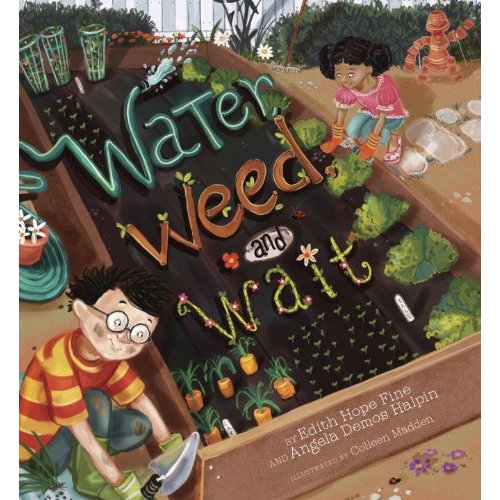
TODAY'S PICK: Water, Weed, and Wait

This new picture book, written by Edith Hope Fine and Angela Halpin, will be released in August (8/10/2010). It follows the story of Miss Marigold, a teacher at Pepper Lane Elementary who works with her students to create a garden in their schoolyard. With help from the community, students harvest flowers and vegetables.

Farming Outside the Box:

"Growing Power" Thrives in Milwaukee


In 1993, Will Allen purchased an abandoned nursery on the north side of Milwaukee. Hoping to employ local teenagers and grow fresh food for his community, he transformed two acres into a productive, sustainable farm named Growing Power. Fifteen years later, Allen became the second farmer ever to receive a McArthur Genius Grant, honored for his innovative work in sustainable food systems and agricultural education.

Though additional sites have developed throughout Wisconsin and Chicago, Milwaukee remains the headquarters for Growing Power projects. Allen’s farm currently includes six greenhouses (home to vegetables, herbs, hydroponic fish runs, and vermicompost bins), four hoop houses for vegetables and vermicomposting, three hoop houses for poultry, an apiary with five bee hives, outdoor areas for livestock, and an anaerobic digester to generate energy from farm waste. Individuals and school groups are welcome to tour the farm’s facilities, and Allen also offers volunteer and internship opportunities.


Allen’s vision of a healthier Milwaukee is embodied in the farm’s motto: “Grow, Bloom, Thrive.” Everything is raised to organic standards, free from synthetic fertilizers and other chemicals. His application of vermiculture, for example, not only ensures that soil is nutrient-rich, but also guarantees that soil has not been exposed to toxins such as lead. (Milwaukee has long struggled with high blood-lead levels in children, predominantly from peeling lead-based paint in older homes.) Allen is highly selective about his seed vendors, and plants only organic seeds in each of the farm’s 15,000 pots.


Click here for more information about the aquaponics system in Allen's hoop houses. The decision to raise fish alongside vegetables in just one example of the innovative farming practices at Growing Power.

While the Milwaukee farm predominantly serves city residents, Allen is also vocal about food justice and sustainable agriculture on a national scale. He speaks about environmental responsibility, the development of local food networks, and the importance of eliminating food deserts. After receiving the MacArthur Genius Grant in 2008, Allen won a Ford Foundation Leadership Grant in 2009 and appeared on TIME Magazine’s list of the 100 most influential people of 2010. He continues to speak across the country, and will be speaking at a conference in Washington, DC on June 18.

Click here for more information about Will Allen and Growing Power.

Click here for Growing Power’s schedule of upcoming events, and look for a chance to meet Will Allen in your hometown!

----------------------

KEYWORDS for this post:

Apiary: Sometimes called a “bee yard,” apiaries are areas designated for bee hive management. While beekeepers can harvest honey from the hives, many farmers maintain hives to assist with crop pollination.

Food desert: An area isolated from fresh and nutritious food, food deserts are often found in low-income, urban areas. They lack access to even conventional supermarkets, and fast food restaurants or convenience stores may be the only local sources of groceries.

Hoop house: A low-cost alternative to traditional greenhouse structures, hoop houses have a plastic roof stretched over flexible piping. The plastic retains heat absorbed from the sun, allowing plants to grow even during cold weather.

Vermicomposting: A composting process that allows worms to break down organic matter into nutrient-rich fertilizer.

Farming Outside the Box:

A Farm That Doesn't Feed Its Animals

Veta La Palma is a fish farm, among other things, located on an island ten miles inland of the Atlantic Ocean on the Guadalquivir River. In the 1980's, Argentine farmers failed to build a successful beef-cattle farm on its wetlands. They built a system of canals to drain the wetlands so the cattle could live off of the land, but the expenses were too great and the ecological effects were too devastating to control. Around ninety percent of the birds died and the ecosystem began to collapse.
After the cattle business failed, Veta La Palma opened up the gates to the canals and flooded its 27,000 acre space to become a fish farm. The ecosystem has recovered and is so healthy that the fish, which include sea bass, meagre and sole, eat naturally occurring shrimp and other aquatic invertebrates. This means that the farmers do not have to feed their fish.

Healthy fish, however, mean healthy predators. The bird population, mainly flamingos, has regrown and flourished on a diet of shrimp and fish since the wetlands were flooded. In a TIME interview Miguel Medialdea from Veta La Palma said, "They take about 20% of our annual yield, but that just shows the whole system is working." And so the farmers determine the success of their farm by the health of its predatory population, an interesting irony in the world of aquaculture.

Another benefit of the farm's ecological health is the micro algae and other plant life in the water, which pulls much of the excess fertilizer runoff out of the waters that flow into the farm from the Guadalquivir. The water that leaves the farm is cleaner than when it entered.

And so Veta La Palma is not only an extremely efficient fish farm, harvesting 1,200 tons of fish a year, it has inadvertently become a refuge for hundreds of thousands of migrating aquatic birds and has a positive impact on the surrounding environment.

This truly seems like a positive future for aquaculture.

DC Council Approves the Healthy Schools Act

Thursday, May 27, 2010

First the bad news...
  • Nearly half the children in D.C. are overweight or obese.
  • In some parts of the District, more than 70% of residents are overweight or obese.
  • DC has the highest rate of adolescent obesity in the United States.

Depressing statistics like these were what motivated DC Councilmember Mary Cheh (Ward 3) to take action by introducing the Healthy Schools Act. The great news is that the DC Council recently passed and funded the Act!

The Healthy Schools Act aims to improve the nutrition, health and wellness of kids in DC. Key provisions of the legislation include:

  • Raising the nutritional standard and quality of school meals by bringing in more local fruits and vegetables to school cafeterias.
  • Tripling the amount of physical and health education taught in DC schools.
  • Establish school gardens as integral components of school and public charter schools.

    The last provision is key to improving the health and nutritional status of DC school children, because we have consistently seen that kids become more enthusiastic about eating fresh, nutritious food when they are involved in the growing process.

    TGC shares the goals of the Healthy Schools Act (especially since we are based in DC), and the DC Council’s decision to pass it is a crucial first step to improving the nutrition, health, and wellness of DC school children.

    Sign the Petition to End Hunger Now

    Monday, May 17, 2010

    FAO recently launched the 1 Billion Hungry online petition: http://www.1billionhungry.org/. The 1 Billion Hungry campaign aims to bring attention to the more than 1 billion people around the world who suffer from chronic hunger. Please join us in getting mad that 1 billion people in the world are hungry and sign the petition.

    Photos from the worldwide campaign are available on the 1 Billion Hungry Flickr page.

    You can also watch videos on the 1 Billion Hungry YouTube channel through this link.

    Finally, you can read FAO Director-General Jacques Diouf’s Huffington Post blog on the campaign here.

    The Growth of Herbicide-Resistant Weeds

    Tuesday, May 4, 2010

    Farmers frequently consider weeds to be the most serious threat to their harvest. Some experts estimate that weeds cause $95 billion a year in lost food production at a global level.

    A recent New York Times article examines the problems caused by the rise of herbicide-resistant weeds.

    For years farmers across America used the herbicide glysophate, also popularly known as Roundup, to effectively deal with weeds. However, the excessive use of glysophate has led to the growth of herbicide-resistant weeds.

    Ten glysophate-resistant weeds have now been detected in at least 22 US states, infesting millions of acres. To deal with these persistent weeds, farmers are increasingly using more herbicides that cause even more damage to the environment.

    We are glad to say that the TGC vegetable gardens do not suffer from the same problem, and that they do not contribute to excessive use of herbicides. The EarthBox’s mulch cover prevents weeds from taking root, so it eliminates the need to use any herbicides.