

Eating Local: Find a Farmers Market!
Thursday, June 24, 2010

 EMAIL THIS POST
Farming Outside the Box: Global Buckets
What Can You Do with Two Buckets, a Pipe and a Cup?

The Buster brothers of Boulder, Colorado can efficiently grow fruits and vegetables of any kind. The 17 year old Grant Buster and the 15 year old Max Buster decided to try and mimic the EarthBox design with what they call, “locally sourced free or low cost recycled materials.” They have since created Global Buckets, which utilizes not much more than a pair of five-gallon buckets, ten cents worth of PVC pipe and a plastic cup (video after the jump)...
After some holes are drilled in one bucket, the pieces are fitted together, and it is ready for planting. Their ‘sub-irrigation planter’ design allows the potting mix to wick water up from the bottom reservoir into the roots of the plant all while keeping the soil aerated and weed-free. This self-contained system can be put anywhere from a rooftop to an industrial wasteland as long as there is sun. Grant and Max also added an automatic watering system made up of siphoning tubes, which keep all of the water reservoirs at equal levels and uses zero energy.
The beauty of the Global Buckets is that they do not need to be shipped across oceans to be implemented. “The resources are everywhere,” says Max, a rising sophomore at Fairview High School. The information is what must be implemented. Grant, who will be a UC Berkeley freshman next fall, said, “In a perfect world, we would travel to developing countries and teach people to build the Global Buckets ourselves, but we both have school and jobs.”
For now though, people from around the world visit their website daily for instructional videos about their designs and planting advice. And when a friend of theirs in the Peace Corps told them that many people in developing nations are hesitant to drill holes in their buckets for fear of needing the buckets again, they began developing new systems including the “Clay Pot System” and “Garbage Gardening.” The first system uses terracotta pots for the water reservoir to eliminate the need to drill holes in the bucket, and the second system replaces potting soil with cheap or free materials like newspapers to wick water up to the plants.
Possibly the best part of Grant and Max’s Global Buckets program is that they are constantly experimenting with even cheaper and more accessible designs. This allows for a constant improvement in the designs and encourages people from around the world to join in with their experiments. They enjoy the engineering-based problem solving, but the ultimate goal of activism is always in their minds.
Congratulations to the Buster brothers for coming up with new designs for growing food. Have you heard of any other growing innovations that you would like to share with the TGC network? Tell us about it! In the meantime, check out the Buster brother’s website below to learn more about what they’re up to.

Nutrition Facts: Sodium
Monday, June 21, 2010
 Slash your Sodium & Salt Intake
High sodium diets can raise the risk of stroke, hypertension and heart disease. Processed foods are the main culprit behind high-sodium diets so try to eat more fresh produce!
-Click here to see an extensive list of tips to slash your sodium intake
Read in Under 60 Seconds…
-Click here to learn five tips to slash your sodium intake and see if you are in an at-risk group.
What is Fiber?

Fiber, found in all fresh vegetables, fruits and grains, is essentially a carbohydrate, except it cannot be broken down into a single sugar molecule in the digestive system. This means that instead of passing into the bloodstream, like regular carbs, fiber is not absorbed but works its way straight down the digestive tract. Click here to learn more.
Read in Under 60 Seconds…
Click here to see a recipe for a fiber-rich meal.
Book Corner
Monday, June 14, 2010
Are you interested in starting your own garden? Do you have students or children who would like to learn more about fruits and vegetables? The Growing Connection invites you to visit our Book Corner, a special section of the blog reserved for reading suggestions. We plan to post titles for all age groups, ranging from picture books to more advanced publications on issues like food security. If you have a favorite book about gardening or agriculture, please let us know!
TODAY'S PICK: Water, Weed, and Wait
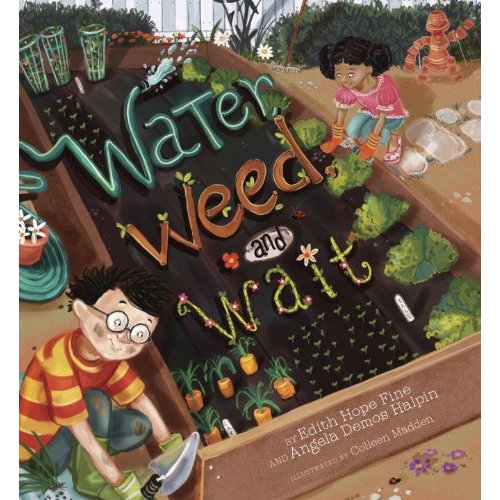
This new picture book, written by Edith Hope Fine and Angela Halpin, will be released in August (8/10/2010). It follows the story of Miss Marigold, a teacher at Pepper Lane Elementary who works with her students to create a garden in their schoolyard. With help from the community, students harvest flowers and vegetables.
Farming Outside the Box:
"Growing Power" Thrives in Milwaukee

In 1993, Will Allen purchased an abandoned nursery on the north side ofMilwaukee
Though additional sites have developed throughoutWisconsin and Chicago , Milwaukee
Allen’s vision of a healthierMilwaukee Milwaukee

Click here for more information about the aquaponics system in Allen's hoop houses. The decision to raise fish alongside vegetables in just one example of the innovative farming practices at Growing Power.
While theMilwaukee Washington , DC

In 1993, Will Allen purchased an abandoned nursery on the north side of
Though additional sites have developed throughout
Allen’s vision of a healthier

Click here for more information about the aquaponics system in Allen's hoop houses. The decision to raise fish alongside vegetables in just one example of the innovative farming practices at Growing Power.
While the
Click here for more information about Will Allen and Growing Power.
Click here for Growing Power’s schedule of upcoming events, and look for a chance to meet Will Allen in your hometown!
----------------------
KEYWORDS for this post:
Apiary: Sometimes called a “bee yard,” apiaries are areas designated for bee hive management. While beekeepers can harvest honey from the hives, many farmers maintain hives to assist with crop pollination.
Food desert: An area isolated from fresh and nutritious food, food deserts are often found in low-income, urban areas. They lack access to even conventional supermarkets, and fast food restaurants or convenience stores may be the only local sources of groceries.
Hoop house: A low-cost alternative to traditional greenhouse structures, hoop houses have a plastic roof stretched over flexible piping. The plastic retains heat absorbed from the sun, allowing plants to grow even during cold weather.
Vermicomposting: A composting process that allows worms to break down organic matter into nutrient-rich fertilizer.
Farming Outside the Box:
A Farm That Doesn't Feed Its Animals
Veta La Palma is a fish farm, among other things, located on an island ten miles inland of the Atlantic Ocean on the Guadalquivir River. In the 1980's, Argentine farmers failed to build a successful beef-cattle farm on its wetlands. They built a system of canals to drain the wetlands so the cattle could live off of the land, but the expenses were too great and the ecological effects were too devastating to control. Around ninety percent of the birds died and the ecosystem began to collapse.
 After the cattle business failed, Veta La Palma opened up the gates to the canals and flooded its 27,000 acre space to become a fish farm. The ecosystem has recovered and is so healthy that the fish, which include sea bass, meagre and sole, eat naturally occurring shrimp and other aquatic invertebrates. This means that the farmers do not have to feed their fish.
Healthy fish, however, mean healthy predators. The bird population, mainly flamingos, has regrown and flourished on a diet of shrimp and fish since the wetlands were flooded. In a TIME interview Miguel Medialdea from Veta La Palma said, "They take about 20% of our annual yield, but that just shows the whole system is working." And so the farmers determine the success of their farm by the health of its predatory population, an interesting irony in the world of aquaculture.
Another benefit of the farm's ecological health is the micro algae and other plant life in the water, which pulls much of the excess fertilizer runoff out of the waters that flow into the farm from the Guadalquivir. The water that leaves the farm is cleaner than when it entered.
And so Veta La Palma is not only an extremely efficient fish farm, harvesting 1,200 tons of fish a year, it has inadvertently become a refuge for hundreds of thousands of migrating aquatic birds and has a positive impact on the surrounding environment.
This truly seems like a positive future for aquaculture.
Subscribe to:
Posts (Atom)
